If you’re sourcing soft-dried fruit in Private label from Vietnam or OEM, ODM — or any food product — for the first time, you’ve probably run into these three terms and wondered which one actually applies to you.
They get used interchangeably online, but they describe three very different manufacturing relationships. Pick the wrong one, and you either overpay for customization you didn’t need, or you launch a product that looks exactly like your competitor’s.
This guide breaks down OEM vs ODM vs private label manufacturing in Vietnam, in plain language, so you can walk into your first supplier conversation knowing exactly what to ask for.
By the end, you’ll understand:
1) What OEM, ODM, and private label actually mean — not just the textbook definition, but how they play out on the factory floor
2) Which model fits your business stage and budget
3) Why Vietnam manufacturing has become a serious alternative to Thailand and China for these three models
4) How to choose a supplier without getting burned on MOQ, timelines, or IP
Why This Distinction Affairs for Vietnam Buyer
Most first-time buyers ability out to a Vietnamese supplier with a ambiguous idea: “I appetite my own cast of broiled mango.” That audible book could beggarly three absolutely altered projects.
Do you want:
- A product built to your exact specifications, with formulation and packaging designed from scratch? That’s OEM
- A product the factory already knows how to make well, with some customization on flavor, size, or ingredients? That’s ODM.
- An existing product, unchanged, simply repackaged under your brand name? That’s private label from Vietnam.
Each path has a different cost, a different timeline, and a different level of control. Getting this wrong early costs buyers weeks of back-and-forth with suppliers — or worse, a signed contract for the wrong service.
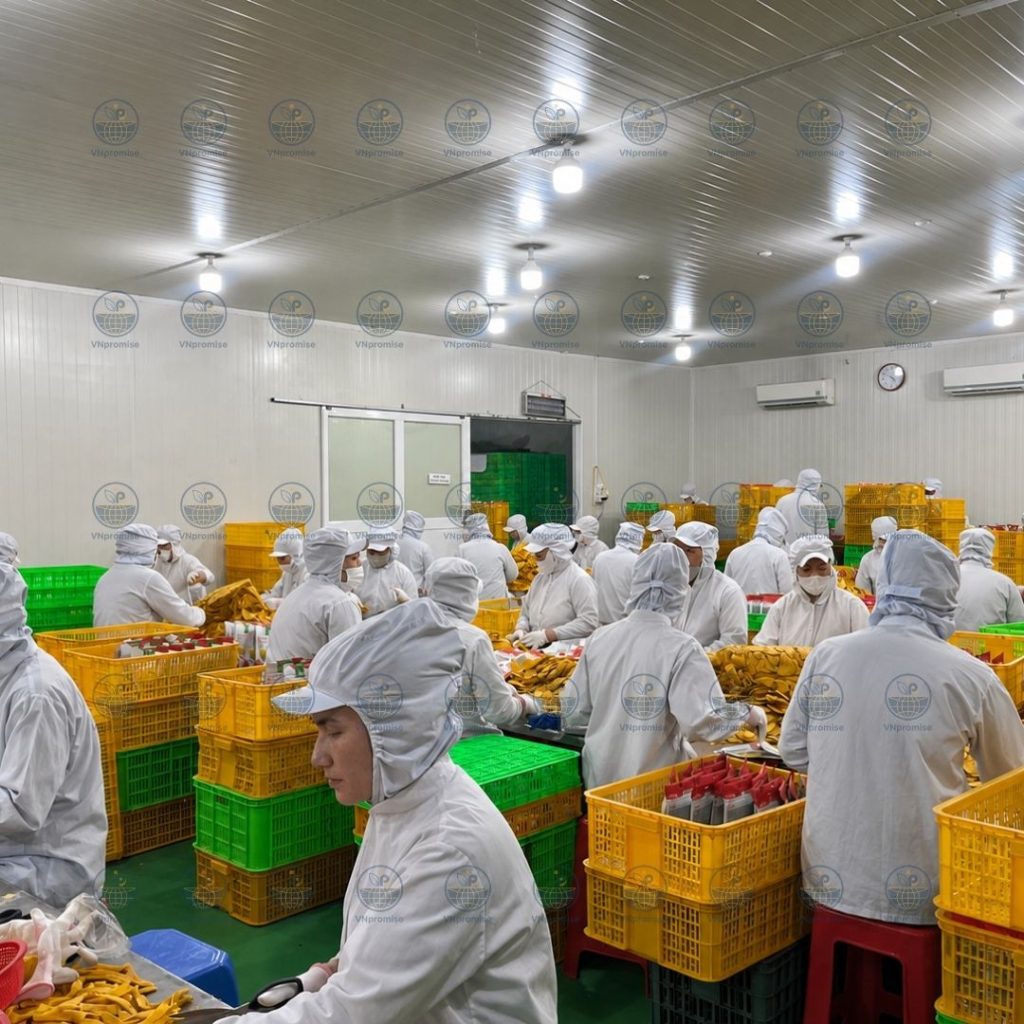
For Vietnam OEM manufacturing, Vietnam ODM manufacturing, and Vietnam private label manufacturing, the underlying logic is the same as anywhere else in the world. What changes is cost structure, minimum order quantities (MOQ), and how much hand-holding you’ll need as a foreign buyer working with a Vietnamese production partner. We’ll cover all of that below.
What Is OEM? (Original Equipment Manufacturer)
OEM stands for Original Equipment Manufacturer, though in the food and consumer goods world, “equipment” is misleading — it really means “original product manufacturer” working entirely to your spec.
In an OEM relationship, you bring the design, the buyer brings the production capacity. You decide:
- The exact recipe or formulation;
- Ingredient sourcing preferences Packaging structure and materials;
- Product dimensions, weight, and shelf-life targets;
- Sometimes even proprietary processing method;
The manufacturer executes your specifications using their equipment, facility, and labor. Nothing about the finished product is “off the shelf” — it’s built from your blueprint.
Who owns the IP in OEM?
This is the part buyers get wrong most often. In a true OEM arrangement, you — the buyer — typically own the product design and formulation IP, because you created it. The manufacturer owns the equipment and process know-how, but the specific product concept is yours, and this should be written into your supplier contract, not assumed.
What OEM absolutely looks like for soft-dried fruit
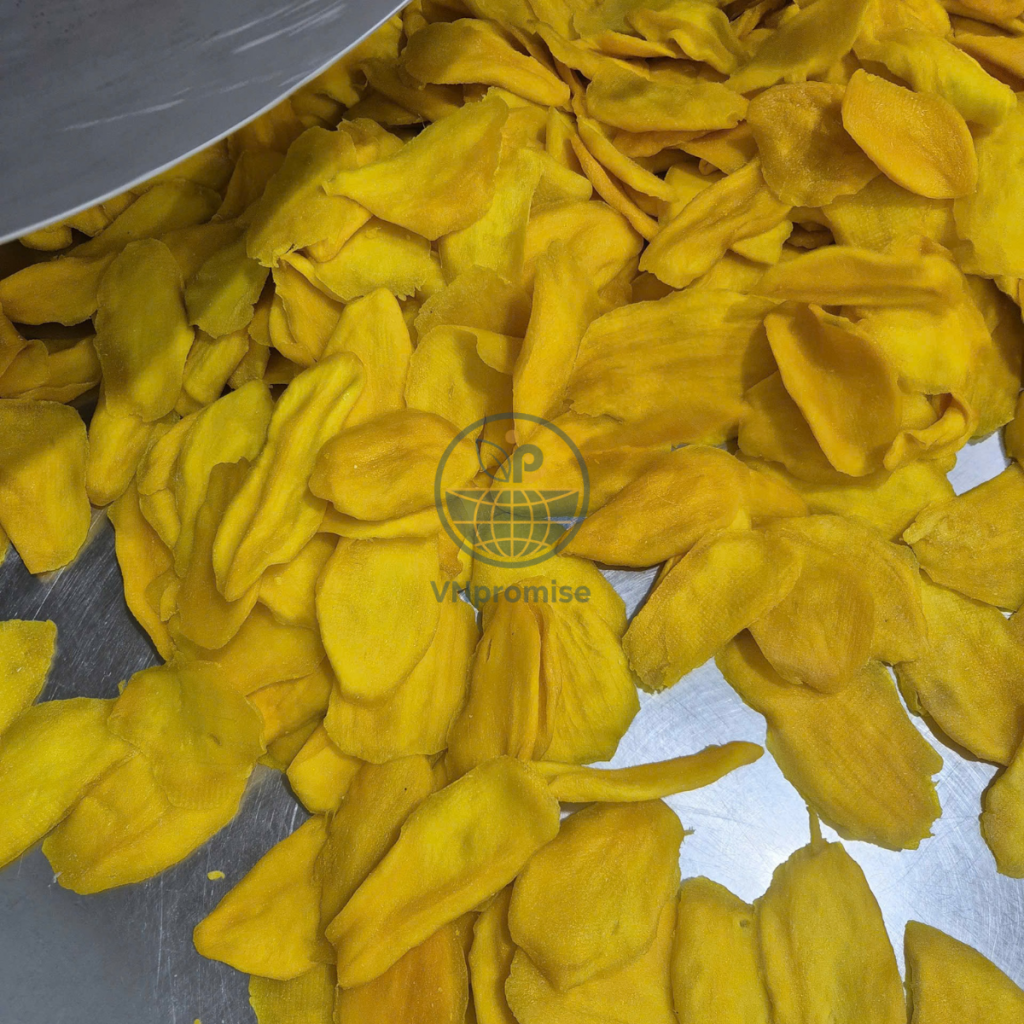
Say you want a low-sugar dried mango blend with a specific texture, a proprietary spice coating, and biodegradable packaging you’ve already designed with your own graphic files. That’s an OEM project. The factory isn’t offering you their existing dried mango — they’re building your product from your specifications, using their drying and packing infrastructure.
OEM tradeoffs
Pros:
- Full control over formulation, texture, and packaging
- Product differentiation — no other brand has the exact same item
- You own the design IP (contract-dependent)
Cons:
- Highest amount of the three models, due to R&D, sampling rounds, and custom tooling
- Longest advance time — apprehend assorted sample iterations afore production
- Usually requires college MOQ to absolve the factory’s bureaucracy and conception work
OEM is the appropriate fit if: you acquire a specific conception or packaging vision, account for development time, and appetite a defensible, differentiated product.
What Is ODM? (Original Design Manufacturer)
ODM stands for Original Design Manufacturer. This is the middle ground between full customization and buying something entirely pre-made.
In an ODM relationship, the factory already has a base design or formulation — often a product they’ve refined over years of production — and you customize elements of it to fit your brand: flavor profile, sweetness level, cut size, packaging format, or portion sizing.
The key ODM distinction
The manufacturer typically retains ownership of the base design or recipe IP, because it existed before you arrived. You’re licensing a customized version of something the factory already knows how to produce well — not creating something from zero.
What ODM looks like for soft-dried fruit
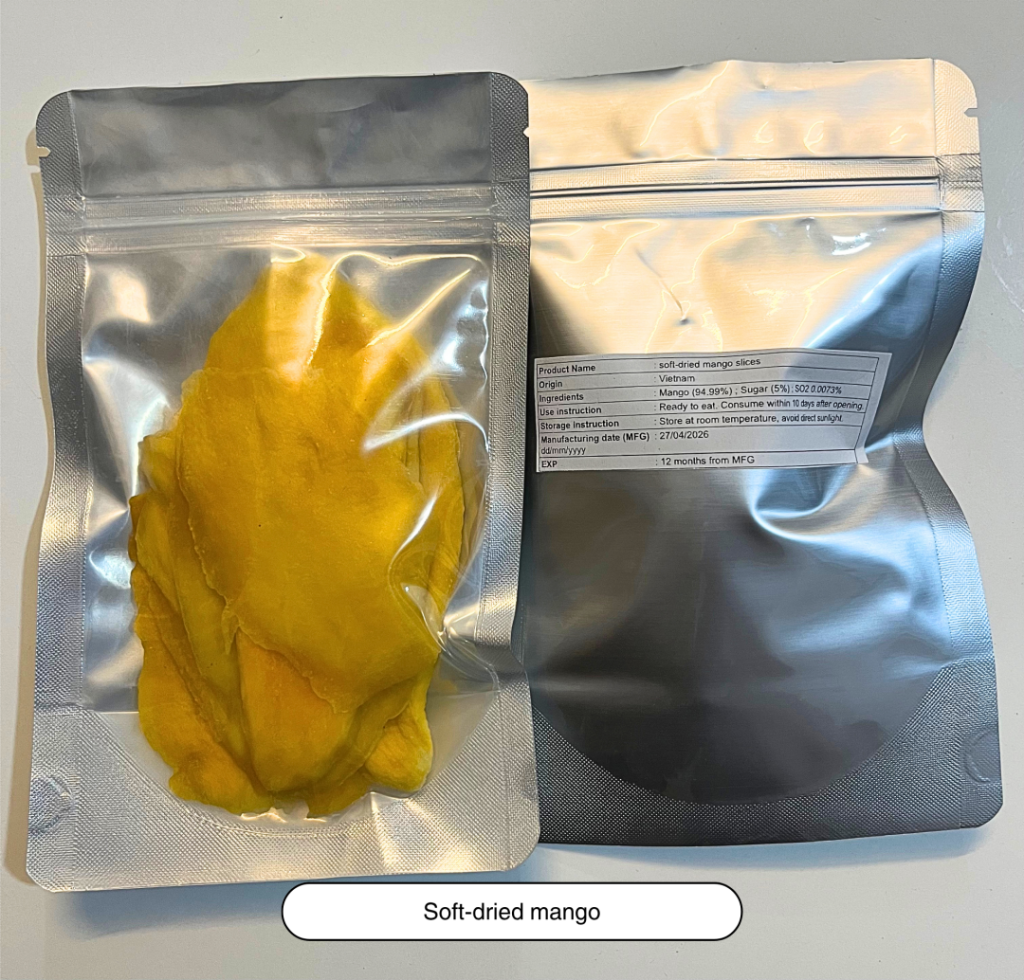
The factory already produces a soft-dried pineapple using a proven drying process. You come in and request: less added sugar, a smaller diced format instead of rings, and your own pouch design. The factory adjusts their existing process to meet your requests — but the underlying method and base recipe were theirs first.
ODM tradeoffs
Pros:
- Faster to market than OEM — no need to develop a process from scratch
- Lower development cost, since you’re modifying rather than inventing
- Still gives you meaningful brand differentiation on flavor, format, or packaging
Cons:
- Less exclusivity — the base product or process may also be offered (in modified form) to other buyers
- You typically don’t own the underlying formulation IP
- Customization is bounded by what the factory’s existing process can flex to accommodate
ODM is the appropriate fit if: you want a product that feels distinct from off-the-shelf goods, without the cost and timeline of building a formulation from zero.
What Is Private Label?
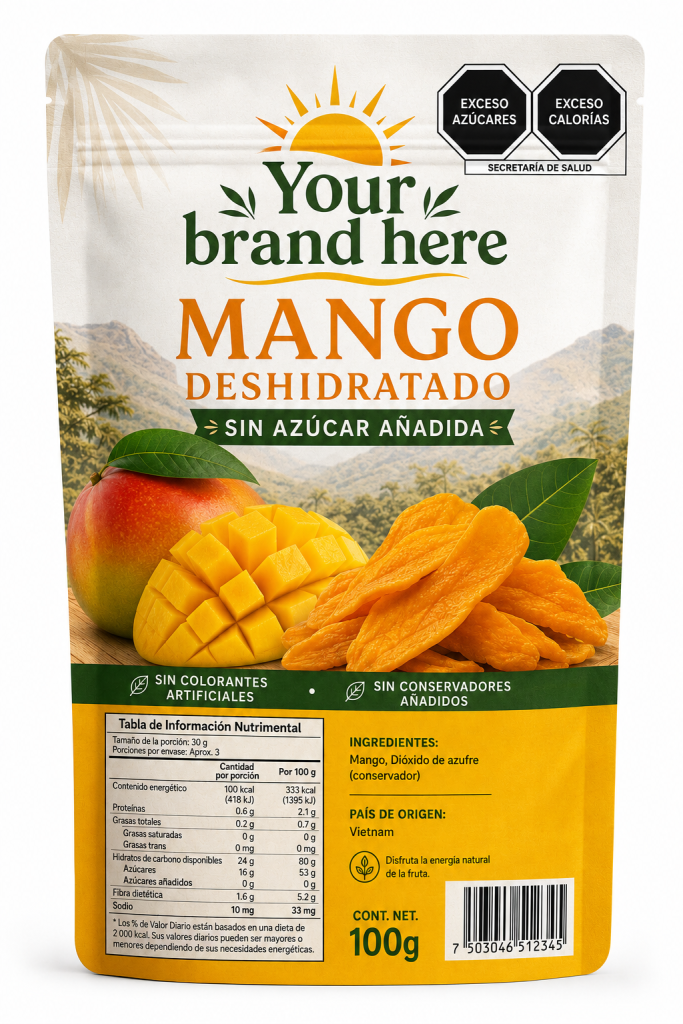
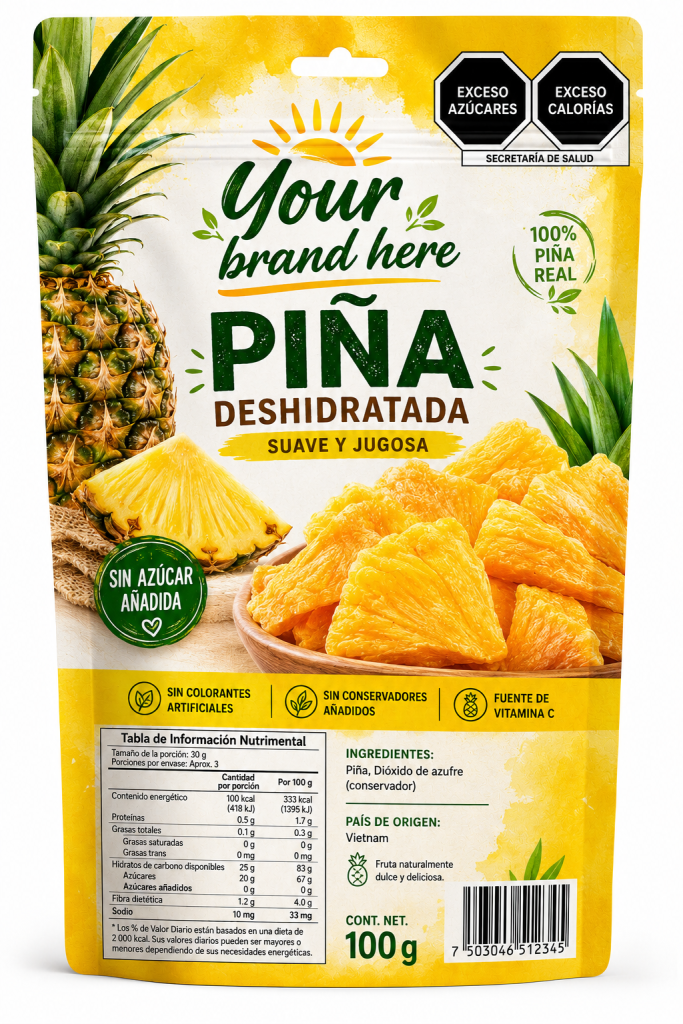
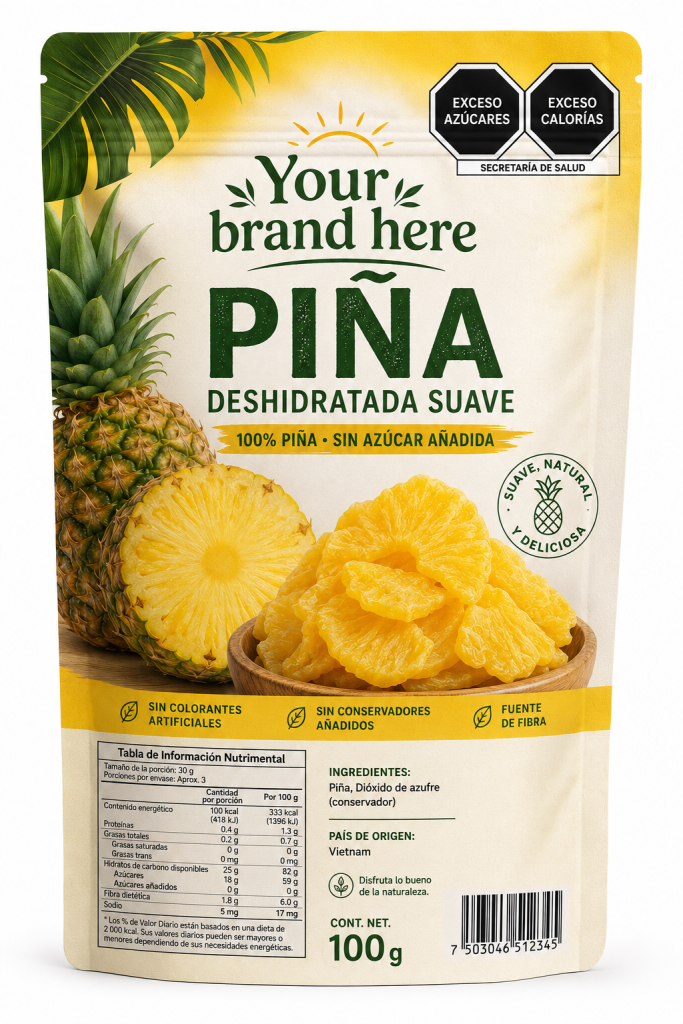
Private label soft dried mango from Vietnam is the fastest and lowest-cost route to launching your own branded product.
In a private label arrangement, the factory’s existing product goes into your packaging, under your brand name, with little to no change to the product itself. You’re not designing a recipe or requesting a custom formulation — you’re rebranding something the factory already makes at scale.
What private label looks like for soft-dried fruit
The factory already produces a soft-dried jackfruit that’s sold to multiple brands. You order it, put your logo and label on the pouch, and sell it as your own product. The fruit, the cut, the drying process — all identical to what other buyers of the same product receive.
Private label tradeoffs
Pros:
- Fastest launch timeline of the three models — often weeks, not months
- Lowest cost of entry — no R&D or formulation development fees
- Lowest MOQ, since the factory isn’t customizing a production run for you
Cons:
- Little to no product exclusivity — competitors may source the identical product
- Minimal control over formulation or process
- Harder to build a defensible brand position on product uniqueness alone (you’ll need to differentiate on branding, story, or market positioning instead)
Private label from Vietnam is the right fit if: you want to test a market quickly, you’re an early-stage brand with limited budget, or your differentiation strategy is branding and distribution rather than product formulation.
OEM – ODM – Private Label from Vietnam: Side-by-Side Comparison
| Factor | OEM | ODM | Private Label |
|---|---|---|---|
| Who designs the product | You | Factory (with your input) | Factory (unchanged) |
| Level of customization | Full | Partial | Minimal (packaging only) |
| IP ownership | Usually the buyer | Usually the factory | Factory (product), buyer (brand only) |
| Development cost | Highest | Moderate | Lowest |
| Typical lead time | Longest | Moderate | Shortest |
| Typical MOQ | Highest | Moderate | Lowest |
| Product exclusivity | High | Moderate | Low |
| Best for | Brands with a specific product vision | Brands wanting differentiation without R&D cost | Brands testing a market fast |
Which Model Fits Which Business Stage?
Startups and first-time importers
If this is your first time sourcing dried fruit from Vietnam, private label is usually the smartest entry point. It lets you test demand, validate your packaging and branding, and build a relationship with a supplier — all before committing budget to custom formulation. Many VNPROMISE clients start here specifically because of the low MOQ from 500kg, far below what most Thai or Chinese suppliers will accept.
Growing distributors
Once you have sales data and know what your market responds to, ODM becomes the logical next step. You can request flavor or format adjustments that differentiate you from competitors selling the same private label product, without paying for full product development.
Established brands
If you have a defined product identity, proprietary formulation ideas, or specific packaging requirements tied to your brand equity, OEM is worth the investment. At this stage, the cost and lead time of custom development is offset by the exclusivity and IP ownership you gain.
There’s no wrong starting point — many buyers move from private label, to ODM, to OEM as their volume and brand identity grow. What matters is choosing the model that matches your current stage, not the one that sounds most impressive.
Why Vietnam Matters for OEM, ODM, and Private Label Manufacturing
Buyers sourcing dried fruit have historically defaulted to Thailand or China — but both come with tradeoffs that are pushing more EU, UK, and GCC buyers to look at Vietnam manufacturing instead.
Thai suppliers are established and high-volume, but typically require 2–5 ton minimum orders, pricing out smaller brands and first-time importers. Their scale is built for buyers who already have proven demand — not for someone testing a new market.
Chinese suppliers offer aggressive pricing, but many EU, UK, and GCC buyers have grown cautious about compliance transparency and quality consistency since 2020, particularly for food products entering retail channels with strict import documentation requirements.
Vietnam sits between the two — tropical fruit growing regions with genuine agricultural advantages (mango, dragon fruit, jackfruit, pineapple, banana, and passion fruit all grow at scale), improving production quality, and a supply base actively courting the SME and mid-market buyers that Thai factories tend to overlook.
This is where VNPROMISE operates: as a founder-direct consultancy connecting international buyers to dedicated Vietnamese production facilities, under direct oversight, without the multi-ton minimums that define the Thai and Chinese markets. Whether you need OEM, ODM, or private label soft-dried fruit, working with a Vietnam-based partner who understands both the production side and the compliance expectations of EU, UK, and GCC buyers removes most of the friction of sourcing from a country you’ve never worked with before.
Vietnam’s agricultural advantage
Vietnam’s tropical climate spans multiple distinct growing regions, which means fruit sourcing isn’t limited to a single harvest window the way it can be in smaller producing countries. Mango, dragon fruit, jackfruit, pineapple, banana, and passion fruit are grown across different provinces with staggered harvest seasons — which supports more consistent year-round raw material availability than buyers often expect from a single-country source.
Farm-direct sourcing from Vietnam’s most experienced agricultural regions also means shorter supply chains between farm and factory, which matters for a soft-dried product where freshness at the point of processing directly affects final texture and flavor.
The diversification factor
A growing share of EU and UK buyers approaching VNPROMISE aren’t looking to replace an existing Chinese or Thai supplier outright — they’re looking to add a second sourcing country to reduce single-country dependency. This is a familiar strategy in other categories (textiles, electronics components) that’s now extending into food ingredients and private label products, particularly among buyers who experienced supply disruption from a single-source strategy in recent years.
Vietnam, positioned geographically and economically between the ultra-low-cost Chinese market and the established-but-expensive Thai market, fits naturally into that diversification strategy — especially for buyers who don’t yet have the volume to justify Thai suppliers’ minimum order requirements.
How to Choose a Supplier for OEM, ODM, or Private Label in Vietnam
Once you know which model fits your business, evaluate suppliers against these criteria:
1. Samples before commitment
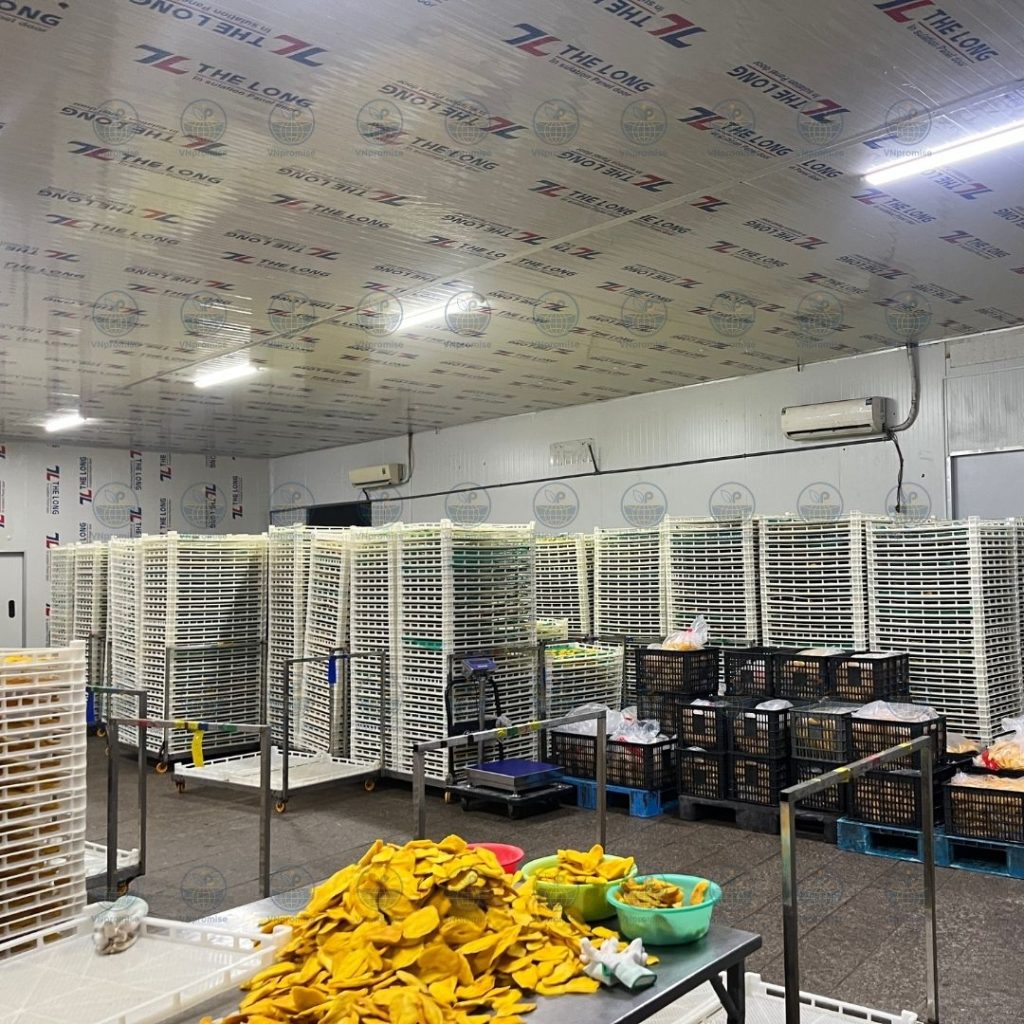
Any credible contract dried mango manufacturer in Vietnam should provide product samples before you commit to a production run — regardless of whether you’re pursuing OEM, ODM, or private label. Use the sample stage to test taste, texture, packaging integrity, and shelf-life claims.
2. MOQ transparency
Ask for MOQ in writing, per product and per packaging format, before you start development conversations. A supplier who won’t quote MOQ upfront is a red flag. VNPROMISE quotes from 500kg — well below the multi-ton minimums common with Thai and Chinese suppliers.
3. Tooling and mold ownership (relevant mainly for OEM)
If your project involves custom packaging tooling or molds, clarify ownership terms in writing before production starts. This matters more for OEM projects, where custom equipment may be built specifically for your formulation.
4. Compliance and export documentation
Ask which certifications the supplier actually holds — not which ones they’re “working toward.” VNPROMISE production partners are HACCP and Halal certified, which covers the two most commonly requested certifications for GCC and general food-safety compliance. If your target retailer requires a specific certification not listed, confirm that in writing before signing anything.
5. Communication reliability
This sounds obvious, but it’s the single most common complaint among first-time Vietnam buyers: slow, inconsistent, or hard-to-parse communication from suppliers. Ask how response times work before you commit, and who your actual point of contact will be once you’re in production. Working directly with a founder — rather than a rotating sales team — tends to solve most of this friction.
6. Product development timeline expectations
Ask your supplier to walk you through what a realistic timeline looks like at each stage of your specific project — from first sample to final production run — before you sign anything. Private label projects should move fastest, since there’s no formulation work involved. ODM projects need time for the factory to test your requested adjustments. OEM projects need the longest runway, since formulation, sampling, and often packaging tooling all have to be developed before a production run can start. A supplier who gives you a single vague timeline regardless of which model you’re pursuing hasn’t fully scoped your project yet.
7. Packaging and labeling flexibility
Confirm early what packaging formats and materials the supplier can accommodate, and whether your own label artwork can be applied directly or needs to be adapted to their production line. This is especially relevant for private label and ODM projects, where packaging customization is often the main lever you have for differentiation. Ask to see examples of packaging the factory has produced for other export clients, particularly to your target market (EU, UK, or GCC), since labeling requirements differ by region.
VNPROMISE OEM ODM Private label manufacturer Vietnam
Common Mistakes to Avoid
Assuming ODM means you own the design.
In most ODM arrangements, the base formulation belongs to the factory. If exclusivity or IP ownership matters to you, you likely need OEM instead — confirm this before you build a brand around a product you don’t actually control.
Forgetting to negotiate exclusivity terms
Even in private label, you can often negotiate some level of exclusivity — for example, the factory agreeing not to sell an identical product under the same packaging format to a competitor in your market. Ask for this in writing; it’s rarely offered automatically.
Choosing OEM before you have market validation.
Full custom development is expensive and slow. Many first-time buyers overinvest in OEM before confirming there’s demand for the product at all. Testing with private label or light ODM customization first reduces this risk significantly.
Not clarifying MOQ per SKU.
If you plan to launch multiple flavors or formats, confirm whether MOQ applies per product or across your total order. This changes your total investment significantly and is worth clarifying before you finalize a product line.
Ignoring compliance documentation until the shipment stage.
EU, UK, and GCC import processes each have different documentation expectations. Confirm what your supplier can provide — HACCP certificates, Halal certification, certificates of origin — early in the process, not after production is already underway.
Frequently Asked Questions
What’s the main difference between OEM, ODM, and private label? OEM means the product is built entirely to your specifications. ODM means you customize an existing factory design. Private label means you rebrand an existing product with no changes to the product itself.
Which model has the lowest MOQ? Private label typically has the lowest minimum order quantity, since the factory isn’t customizing a production run specifically for you. VNPROMISE offers private label soft-dried fruit from 500kg.
Can I switch from private label to OEM later? Yes. Many brands start with private label to validate demand, move to ODM for differentiation, and pursue OEM once they have the volume and budget to justify full custom development.
Does Vietnam offer the same certifications as Thailand or China for soft-dried fruit? Certification availability varies by supplier, not by country. Always confirm which specific certifications a supplier holds — VNPROMISE production partners currently hold HACCP and Halal certification.
Ready to Start Your Private Label, ODM, or OEM Project?
Whether you’re testing the market with a private label soft-dried fruit product, customizing an existing formulation through ODM, or building a fully custom OEM product from the ground up, VNPROMISE works directly with you — founder to buyer — to get you from first sample to shipped order.